




As the body’s unceasing "power pump", the heart’s cellular repair and stress resistance capabilities have always been a core focus of scientific research. Cardiogen (CAS No. 406-76-8), a synthetic tetrapeptide compound, is opening up new perspectives for cardiac health research with its unique mechanism of action. It is not a "drug" in the traditional sense, but a peptide-based biological modulator targeting cardiac tissue, whose value has been verified in numerous preclinical studies.
In terms of molecular nature, Cardiogen is composed of four amino acids—alanine-glutamic acid-aspartic acid-arginine (Ala-Glu-Asp-Arg)—with a molecular weight of approximately 489.5 Daltons. Its water-soluble property allows it to easily penetrate cell membranes and exert its effects. This structural design is not created out of thin air but derived from natural peptide fragments with repair activity in animal myocardial tissue. Researchers isolated and purified the key active motifs to ultimately synthesize high-purity Cardiogen, making it a standardized compound for reproducible research.
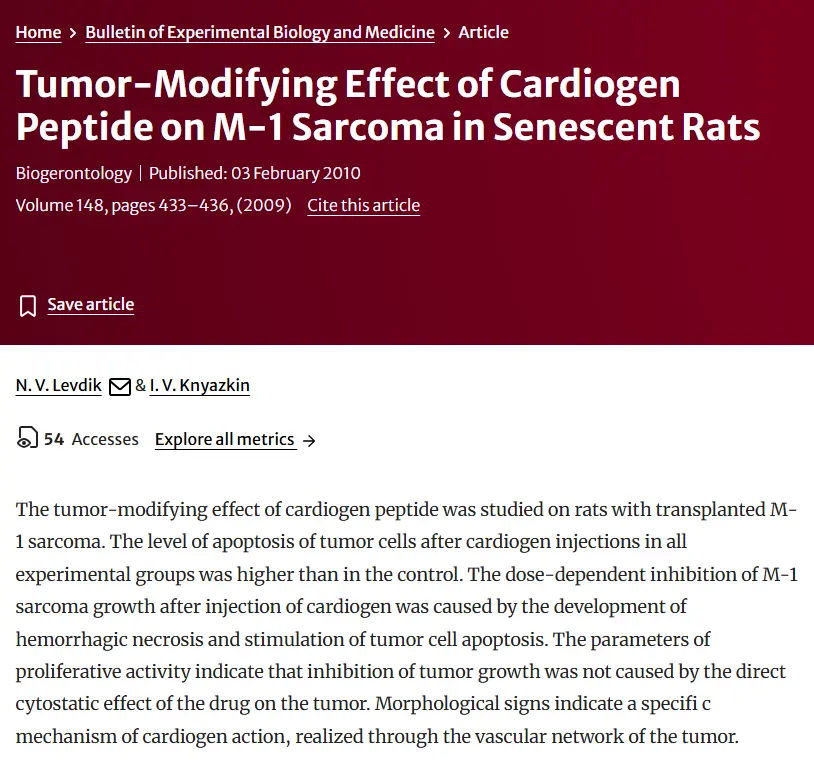
Unlike traditional cardiovascular intervention methods that focus on a single receptor or pathway, the core advantage of Cardiogen lies in the precision regulation of cardiac cells. Studies have shown that it can guide the autonomous repair of cardiomyocytes, improve the efficiency of mitochondrial energy metabolism, and simultaneously enhance the cellular antioxidant defense capacity, helping cardiomyocytes maintain structural and functional integrity under stressful conditions. More notably, it can balance the activity of cardiac fibroblasts—promoting normal tissue repair while inhibiting the formation of excessive scar tissue and preventing cardiac stiffening. This characteristic is particularly important in studies of cardiac injury and aging models.
Tracing its research history, Cardiogen was first developed by a research team at the Russian Military Medical Academy in the 1980s and 1990s, and is one of the important achievements of Dr. Vladimir Khavinson’s research on peptide-based biological modulators. Subsequent studies have further confirmed that it can upregulate the synthesis of key structural proteins such as actin and tubulin, providing a molecular basis for cardiomyocyte regeneration and functional maintenance. It has demonstrated potential application value in models of ischemic heart disease, myocardial hypertrophy and other conditions.
At present, relevant findings on Cardiogen are still limited to cell culture and animal experiment stages, but these preclinical data have clearly demonstrated its potential as a cardiac tissue-specific biological modulator. It provides an important tool for researchers to explore the mechanisms of cardiac aging and develop new intervention strategies for cardiovascular health, and also gives us a deeper understanding of "safeguarding cardiac health at the molecular level".
Keyword:Cardiogen,406-76-8,Cardiogen Cardioprotective Peptide,Cardiogen Synthetic Peptide