




In the field of neuropeptide research, delta-sleep-inducing peptide (DSIP, CAS 62568-57-4) has long retained an air of "controversial allure". First isolated and identified from the cerebral venous blood of rabbits by a Swiss research team in 1977, this small-molecule peptide composed of 9 amino acids (molecular formula: C₃₅H₄₈N₁₀O₁₅; molecular weight: 848.81) has far transcended its singular label as a "sleep inducer", emerging as a research hotspot spanning sleep regulation, neuroprotection, and other domains.
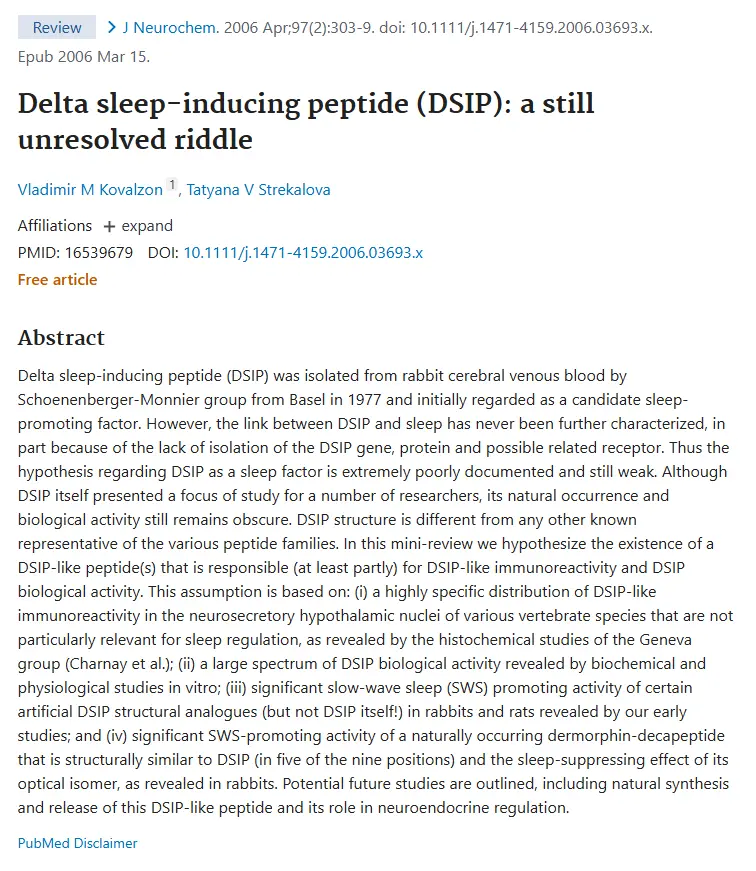
Its association with sleep remains the core of research, yet the conclusions are layered and nuanced. Early studies demonstrated that DSIP can alter sleep architecture: administration in cats subjected to 72 hours of rapid eye movement (REM) sleep deprivation significantly reduced wakefulness and light slow-wave sleep, while increasing the duration of deep slow-wave sleep—without affecting total sleep time. However, other research indicates that DSIP itself is not a specific sleep-promoting substance; instead, its structural analogs more readily exhibit slow-wave sleep-promoting activity, rendering its mechanism of sleep regulation an unsolved puzzle to this day.
Beyond sleep research, the diverse physiological activities of DSIP have gradually been uncovered. Animal experiments have confirmed its distinct antioxidant and anxiolytic properties, with additional potential observed in antiepileptic studies: when co-administered with DSIP-12, it significantly reduces the incidence, severity, and duration of seizures in mice, while regulating the activity of cerebral electroencephalogram (EEG) delta and theta bands—providing a novel direction for the development of antiepileptic drugs.
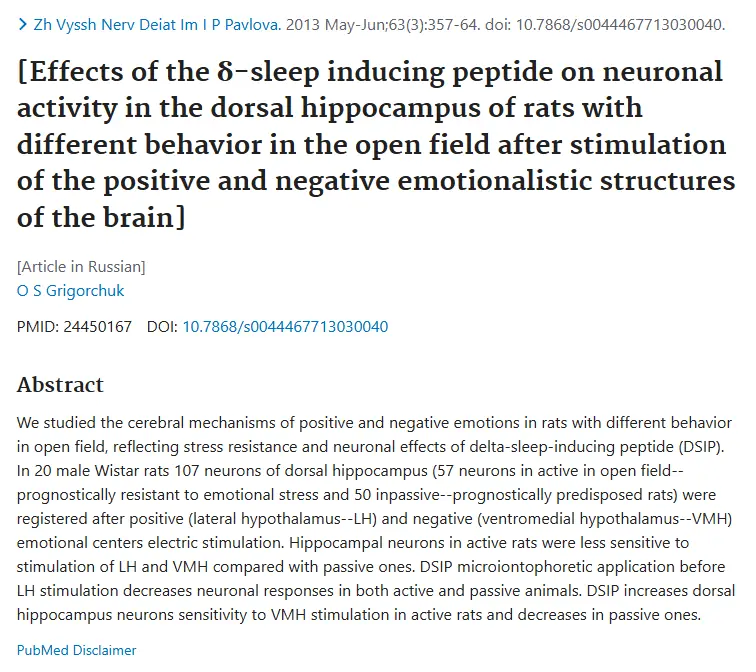
Its neuromodulatory capacity also merits attention. Studies on rats have shown that DSIP can differentially regulate the response of emotional centers in individuals with varying stress resistance by modulating the activity of dorsal hippocampal neurons. It exerts specific control over the stimulation of brain regions associated with positive and negative emotions, suggesting that it may serve as an important tool for mood disorder research.
More uniquely, it possesses favorable bioavailability characteristics: as a peptide, it can cross the blood-brain barrier and be absorbed via the intestinal tract. This inherent advantage endows it with natural potential for clinical translation. Current research is already exploring its application in alleviating withdrawal symptoms associated with opioid drugs and alcohol.
From sleep regulation to neuroprotection, each potential of DSIP requires further empirical validation. Nevertheless, it is undeniable that this neuropeptide, which has been studied for half a century, continues to provide new dimensions for exploration in neuroscience and pharmacology research.