




Keyword:Eloralintide,Eloralintide Peptide
The global obesity epidemic continues to drive intense demand for innovative, effective, and well-tolerated pharmacotherapies. Eloralintide (LY3841136), Eli Lilly's investigational once-weekly amylin receptor agonist, has emerged as one of the most anticipated new weight-loss medications, following groundbreaking Phase 2 results. As a novel therapeutic distinct from the current GLP-1 receptor agonist class, patients and clinicians worldwide are asking: When will Eloralintide be available for clinical use? This article analyzes the drug's current development stage, clinical trial timeline, regulatory pathway, and the most realistic projections for its market launch.
Eloralintide: A Breakthrough Amylin Receptor Agonist for Obesity
Eloralintide represents a major advancement in obesity pharmacotherapy, operating through a mechanism independent of incretin-based therapies like GLP-1s. It is a selective, long-acting analog of human amylin, a hormone co-secreted with insulin by pancreatic beta-cells. Its engineered selectivity for the human amylin 1 receptor (AMY1R)—12-fold greater than for the calcitonin receptor—aims to maximize weight-loss efficacy while minimizing side effects like nausea. The molecule is modified with a C20 fatty diacid moiety, extending its half-life to approximately two weeks, enabling the convenient once-weekly subcutaneous dosing regimen.
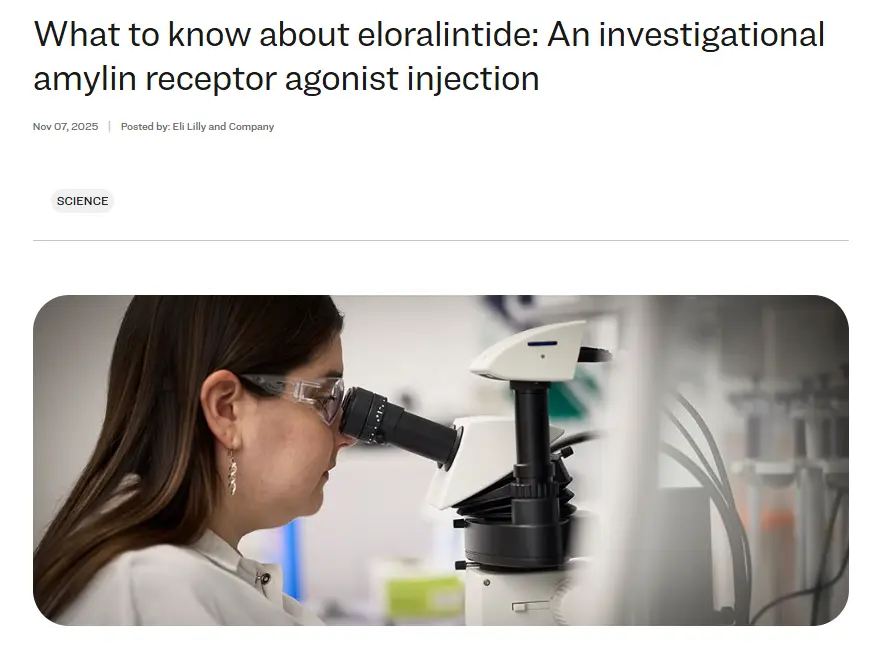
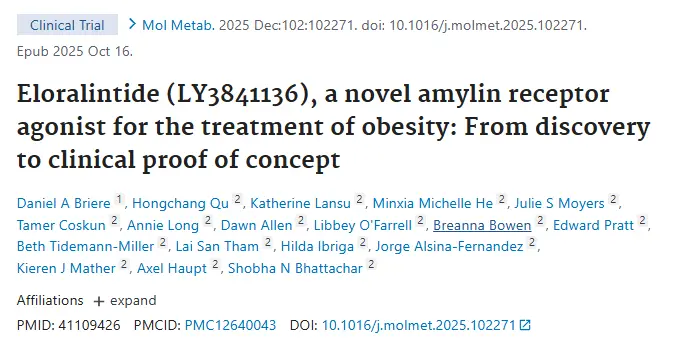
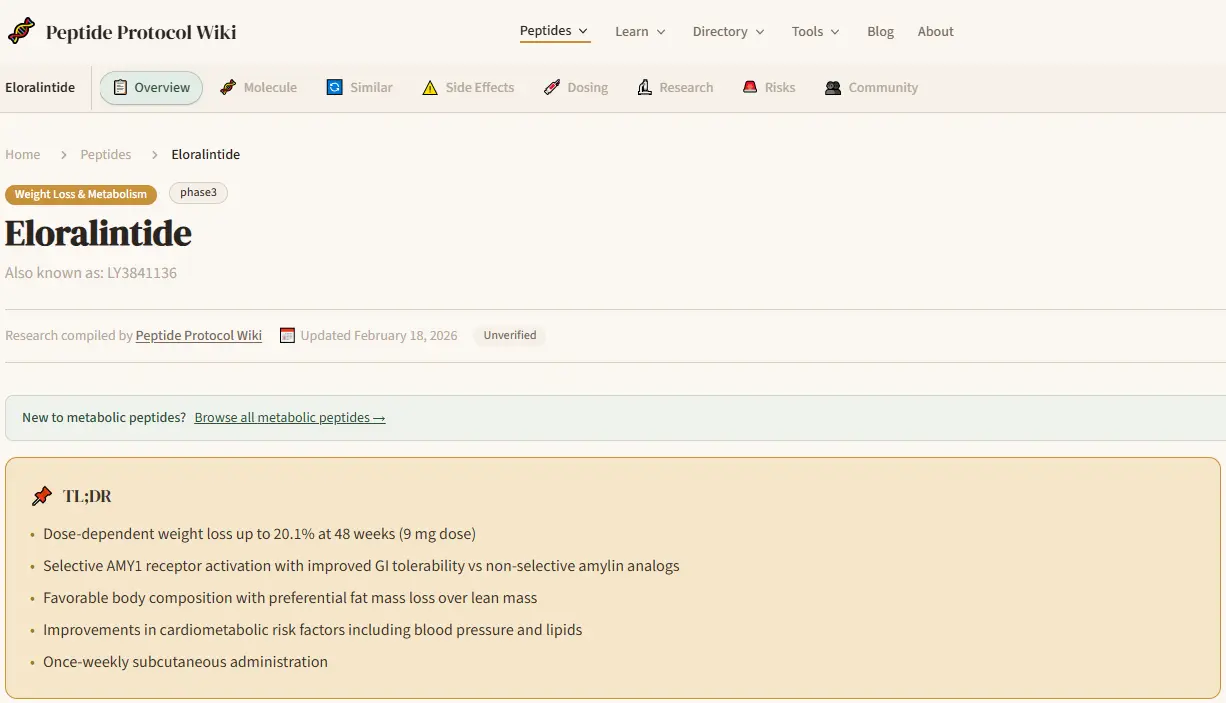
The clinical promise of Eloralintide was solidified by a 48-week Phase 2 trial (NCT06230523) published in The Lancet in November 2025. In this study of 263 adults with obesity, the 9 mg dose achieved a mean weight reduction of 20.1%, compared to just 0.4% in the placebo group. All doses demonstrated clinically meaningful weight loss, ranging from 9.0% (1 mg) to 18.0% (6 mg). Significantly, Eloralintide also improved cardiometabolic risk factors, including waist circumference, blood pressure, lipids, and inflammatory markers. The safety profile was favorable, with most adverse events being mild-to-moderate gastrointestinal symptoms (e.g., nausea) that were transient and manageable. These results position Eloralintide as a potential rival to top GLP-1 therapies, offering a new option for patients who do not respond or tolerate existing treatments.
Current Development Status: Global Phase 3 Trials Underway
As of April 2026, Eloralintide is not yet approved by any regulatory authority, including the U.S. FDA, the EMA, or the NMPA in China. It remains an investigational drug. Following the successful completion of Phase 1 and 2 trials, Eli Lilly initiated the pivotal Phase 3 clinical program, named the ENLIGHTEN trials, in late 2025 and early 2026.
This global Phase 3 program is extensive, comprising multiple pivotal studies to support regulatory approval. Key trials include:
· ENLIGHTEN-1: A study evaluating Eloralintide monotherapy in adults with obesity or overweight and at least one weight-related comorbidity (e.g., hypertension, dyslipidemia) without type 2 diabetes.
· ENLIGHTEN-2: A trial assessing long-term safety and efficacy (up to 2 years).
· ENLIGHTEN-4: A study focused on patients with obesity/overweight and knee osteoarthritis, investigating both weight loss and pain reduction.
Crucially, in March 2026, China's National Medical Products Administration (NMPA) approved Eloralintide to participate in these three global Phase 3 trials, making China an integral part of the drug's global development strategy. This synchronous global development is a deliberate strategy by Lilly to pursue simultaneous regulatory submissions and approvals across major markets.
Projected Timeline: When Will Eloralintide Hit the Market?
Predicting a precise approval date is complex, as it hinges on the successful completion of Phase 3 trials and subsequent regulatory review. However, based on standard pharmaceutical development timelines and Lilly's strategic pace, a realistic projection can be established.
Phase 3 Completion (2027–2028): Pivotal obesity Phase 3 trials typically take 18–24 months to enroll participants and complete treatment periods, followed by several months for data analysis and locking. Given that enrollment began in early 2026, top-line results from the primary ENLIGHTEN trials are most likely expected in late 2027 to mid-2028.
Regulatory Submission (Late 2028): Assuming positive Phase 3 results that replicate or exceed the Phase 2 efficacy and safety profile, Lilly will prepare and submit New Drug Applications (NDAs) to the FDA and the EMA. A simultaneous submission to the Chinese NMPA is highly probable due to the synchronized trials.
Regulatory Review & Approval (2029): Standard regulatory review periods are approximately 10–12 months for the FDA (standard review) and 12 months for the EMA. In the best-case scenario with no major requests for additional data, initial approvals could occur in 2029.
Market Availability (Late 2029 to Early 2030): Following regulatory approval, there is typically a short period for manufacturing setup, distribution logistics, and payer negotiations. Therefore, Eloralintide could be commercially available in the U.S. and EU by late 2029 or early 2030, with launches in other major markets like China following shortly thereafter.
It is important to note that this is an optimistic timeline. Delays can occur due to slower-than-expected enrollment, safety signals emerging in the larger Phase 3 populations, or requests from regulators for additional trials. A more conservative estimate would push potential availability into 2030–2031.
The Competitive Landscape and Future Potential
Eloralintide is at the forefront of a resurgent amylin receptor agonist class. Its primary competitor is Novo Nordisk's cagrilintide, which is being developed both as a monotherapy and in combination with semaglutide (CagriSema). The race to market between these two amylin-based drugs will be a key story in the coming years. For patients, the arrival of Eloralintide signifies the diversification of obesity treatment beyond GLP-1s. Its unique mechanism suggests it could be highly effective as a monotherapy and potentially synergistic when combined with GLP-1 receptor agonists like tirzepatide. Lilly is already investigating this combination strategy in early-stage trials.
In conclusion, while the eagerly awaited Eloralintide is making rapid progress, patients waiting for access must remain patient. The drug is firmly in the critical Phase 3 stage. Barring unforeseen setbacks, the answer to "When will Eloralintide be available?" points to a commercial launch window between 2029 and 2031. This timeline underscores the rigorous scientific and regulatory process required to bring a safe, effective, and transformative new therapy to millions living with obesity.