




When it comes to the feeling of hunger, you may not realize that behind this daily sensation lies a key hormone with diverse functions—ghrelin, also known as human growth hormone-releasing peptide. As the endogenous ligand of the growth hormone secretagogue receptor (GHS-R), this 28-amino acid peptide hormone mainly secreted by the stomach has long transcended the single label of a "hunger signal" and become a research hotspot in multiple fields such as metabolism, neuroscience, and immunology. The CAS numbers 304853-26-7 and 258279-04-8 of its related substances have also emerged as important identifiers in the scientific research community.
One of Ghrelin's core functions is the regulation of appetite and energy homeostasis. Studies have found that ghrelin levels rise significantly in the fasting state, sending feeding signals to the brain; subcutaneous injection of ghrelin can increase energy intake by 27% in healthy volunteers while enhancing the perceived palatability of food. More interestingly, this regulatory effect is not exclusive to mammals—in avian species, ghrelin instead inhibits feeding and regulates macronutrient selection, providing a unique perspective for cross-species energy metabolism research.
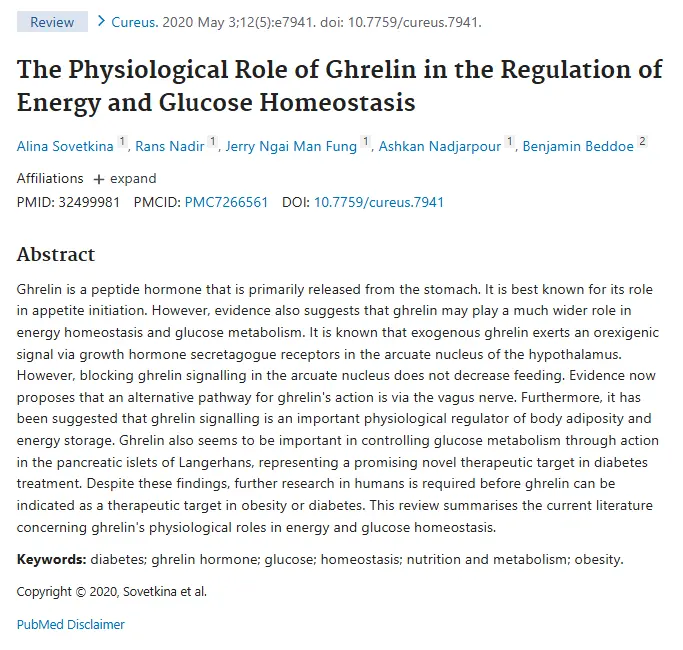
Beyond dietary regulation, ghrelin plays a pivotal role in growth hormone release. It can strongly stimulate growth hormone secretion through the hypothalamic-pituitary axis. In fish, it has also been proven to regulate pituitary growth hormone release via hypothalamic growth hormone-releasing hormone neurons, laying a theoretical foundation for growth regulation research in aquaculture. Meanwhile, its metabolic regulatory effects cannot be overlooked; studies have shown that ghrelin can induce elevated blood glucose levels and reduced insulin secretion in humans, revealing its complex role in glucose metabolic balance.
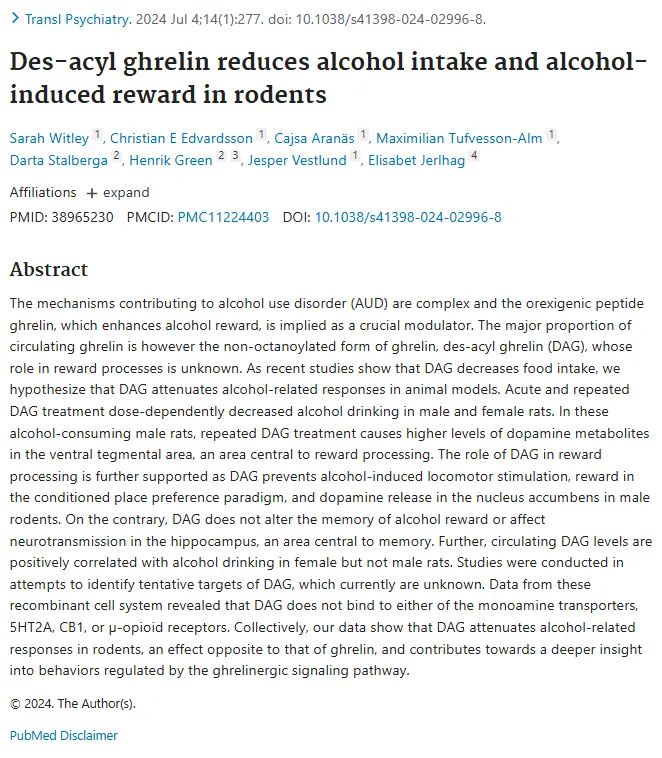
In recent years, the potential of ghrelin in the neuroscience field has gradually been explored. In mouse models of Rett syndrome, injection of ghrelin restored dopamine D1 receptor-mediated neurotransmission in the prefrontal cortex, significantly enhancing the mice's attention and exploratory behaviors, and providing a new direction for the intervention of neurodevelopmental disorders. Further studies have found that ghrelin can reduce human sensitivity to negative feedback and enhance prediction error-related activities in the caudate nucleus, suggesting that it may be involved in reward processing and impulse control, and offering new insights for research on neuropsychiatric diseases such as addiction.
The exploration of its clinical translational value has brought ghrelin even more attention. A team from MIT developed an ingestible "electroceutical capsule" that promotes ghrelin release by electrically stimulating the gastric mucosa, providing a non-invasive new treatment option for appetite loss-related diseases such as anorexia nervosa and cachexia. In addition, ghrelin's anti-inflammatory properties, ability to improve gastrointestinal motility, and role in regulating cardiac function have also demonstrated its application potential in fields such as postoperative recovery and the management of chronic disease complications.
From its basic function of regulating hunger to its cross-system multidimensional regulatory effects, the scientific research value of ghrelin continues to be unlocked. The advancement of these studies is inseparable from the precise exploration of its core substances, and identifiers such as 304853-26-7 and 258279-04-8 serve as important tools for researchers conducting relevant studies. In the future, with the in-depth analysis of ghrelin's mechanism of action, it may bring breakthrough progress in the treatment of more diseases, allowing this "stomach hormone" to exert greater value in life regulation.