




Where KPV Comes From and Why That Matters
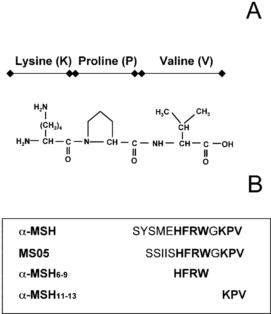
KPV peptide is a fragment of alpha melanocyte stimulating hormone. Alpha MSH is a melanocortin. Melanocortins come from a larger protein called proopiomelanocortin that the body processes into multiple active hormones. Researchers discovered decades ago that you could cut alpha MSH into smaller pieces and retain discrete actions. KPV peptide is the smallest sequence that preserved a strong anti inflammatory effect without the pigmentation and appetite effects often associated with the full hormone.
This origin story matters for two reasons. First, it explains why KPV peptide seems to act like a precise dimmer switch on inflammatory signaling instead of a blunt hammer. Second, it explains why KPV peptide never became a blockbuster drug. Minimal peptides that occur naturally are hard to protect with patents. Without strong commercial protection, investment in large human programs is unlikely. The absence of big human trials is not proof of ineffectiveness. It is a market reality you must keep in mind when you weigh evidence for use.
Chemistry in Plain Language
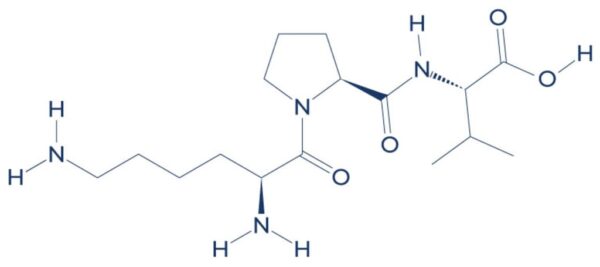
KPV peptide is a tripeptide. That means three amino acids linked in a chain. Lysine sits at one end, proline in the middle, valine at the other end. This tiny size gives KPV peptide a few practical advantages.
Small peptides can ride the PepT1 transporter in the small intestine. That is a transport system that moves dipeptides and tripeptides from the gut into epithelial cells. In practice, this means an oral route is plausible, especially for local effects inside the gut wall. This is why many athletes explore KPV peptide capsules for gut support.
Small peptides diffuse efficiently and wash out quickly. This is both a feature and a drawback. You can get action where you want it. You also must accept a short KPV peptide half life and plan dosing around that reality.
Small peptides can be formulated topically. The skin is hard to penetrate, yet small charged sequences that work locally do not need to dive deeply to calm a superficial immune overreaction.
When you see KPV peptide discussed, you will sometimes see variations on the sequence or conjugated versions described in research. These are attempts to extend exposure, stabilize the peptide against enzyme breakdown, or target delivery to a tissue. For athletes, native KPV peptide is the practical option that shows up in the wild. Everything else remains experimental in laboratories.
Mechanisms that Matter to Athletes
You do not need an immunology degree to use KPV peptide well, but you do need a working model. The following mechanisms are the ones that map to lived athletic problems.
Melanocortin receptor activity. KPV peptide interacts with melanocortin receptors that live on immune and epithelial cells. The interaction lowers production of pro inflammatory cytokines such as TNF alpha, interleukin 1 beta, and interleukin 6. In practice this feels like less global irritation after heavy sessions and fewer flare ups in tissues that you stress every week.
NF kappa B and MAPK pathway modulation. NF kappa B is a transcription factor that turns on the genes that drive inflammation. KPV peptide lowers that activation signal. MAPK pathways also link stress inputs to inflammatory outputs. KPV peptide dials that down as well. In practice that means the signal that would normally escalate a small insult into a multi day problem is kept in a smaller range.
Gut barrier support via PepT1 uptake. KPV peptide is small enough to ride PepT1 transporters in the small intestine. Inside epithelial cells it supports tight junction proteins that keep the barrier intact. When the barrier is intact, endotoxin load is lower, systemic inflammation from meals is lower, and digestion feels predictable. In practice that means bulks feel less boggy and contest prep meals are less likely to trigger bloat.
Local topical immune modulation. In skin, KPV peptide reduces redness and irritation and speeds epithelial closure. In practice that helps with belt rash, strap abrasion, shaving irritation, and hot spots that make training unpleasant.
You will see people claim antimicrobial effects in some models and general wound improvement in others. Those claims usually trace back to the immune modulation and epithelial repair described above. It is safer to say KPV peptide creates a better environment for tissues to fix themselves rather than to claim a direct antimicrobial kill effect as the central benefit.
What Effects You Can Reasonably Expect
KPV peptide is not a mass builder. Expect indirect performance benefits that arrive through reduced friction in recovery, not through direct hypertrophy signaling.
Systemic irritation drops. The subjective feeling is that high volume weeks do not leave you dragged out in the same way. Many athletes describe the difference as the ability to bring a better version of themselves to Wednesday and Friday after a heavy Monday.
Gut behavior improves during stress. During bulks you may notice that meals sit more comfortably and large carbohydrate loads do not produce the same bloat. During cuts you may notice that high fiber or repetitive meals cause fewer complaints. When the gut is steady, training energy and mood are better and compliance stays high.
Local skin issues resolve faster. If you get strap lines, belt hotspots, or small abrasions, topical KPV peptide can shorten how long those limit your comfort.
Joint and tendon noise quiets. This is not a chondroprotective or structural rebuild effect. KPV peptide tamps down the inflammatory overlay that makes everything feel fifty percent worse. That often buys time and space for the real solution which is training modification and tissue loading progression.
Indirect training capacity rises. If each session costs slightly less in systemic disturbance, you can stack more quality in a week. Over months, that is the difference between flat progress and steady progress.
What the Evidence Looks Like and What it Does Not
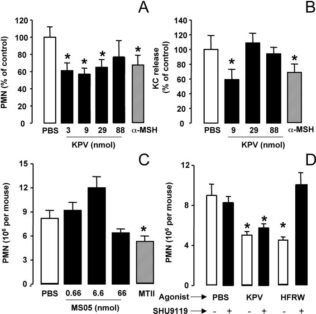
You will not find large randomized controlled trials in competitive athletes. You will find a consistent preclinical story across gut, skin, and immune models where KPV peptide reduces inflammatory signaling, preserves barrier integrity, and speeds epithelial repair. You will also find case level and community reports among lifters and hybrid athletes that match the mechanism. That is not the same as pharmaceutical grade proof, but it is coherent enough to justify a controlled self experiment for many athletes.
The absence of big athlete trials is expected given that KPV peptide is a tiny naturally occurring sequence without strong patent protection. The lack of giant trials is not an indictment. It is a reminder that you should test, measure, and use a high bar for continued use.
KPV Dosage and Administration that Athletes Actually Use
There is no official human dosing guideline. What follows reflects patterns from research contexts, compounding practice, and field reports among lifters. All use is at your own risk and must comply with local law and competition rules.