




In hospital-acquired infections, Pseudomonas aeruginosa (PA) is known as a "persistent superbug"—it often targets immunocompromised, postoperative, or mechanically ventilated patients, causing severe conditions such as pneumonia and bloodstream infections, with persistently high mortality rates and resistance to multiple antibiotics. Data shows that PA accounts for nearly half of hospital-acquired infections in China, with over 57% being multidrug-resistant strains, leaving clinical treatment in a dilemma. Today, we will introduce a targeted candidate drug: Murepavadin (CAS No. 944252-63-5), whose emergence brings new hope for treating drug-resistant PA infections.
Unlike traditional broad-spectrum antibiotics that indiscriminately kill bacteria, moxifloxacin is a cyclic peptide drug composed of 14 amino acids, with its core advantage being "precision targeting." It specifically recognizes the lipopolysaccharide transporter D (LptD) in the outer membrane of Pseudomonas aeruginosa (PA), acting like a key that precisely locks the target, blocking the assembly of key components of the bacterial outer membrane, ultimately causing bacterial death due to membrane damage. This targeted mechanism not only avoids existing resistance pathways in PA but also reduces interference with the body's normal microbiota, mitigating common side effects of broad-spectrum antibiotics such as diarrhea and intestinal disorders.
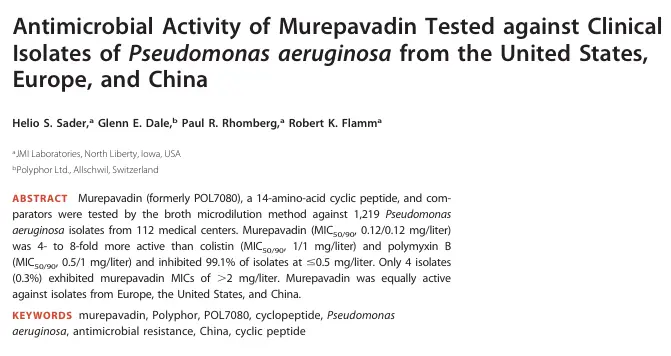
Scientific research data has long confirmed its potent efficacy: In vitro experiments demonstrated that it inhibited over 1,200 clinical PA strains from Europe, America, and China with a rate as high as 99.1%, even showing effectiveness against extensively drug-resistant strains (XDR) such as carbapenem-resistant and colistin-resistant strains, with antibacterial activity 4-8 times that of conventional drugs. Animal studies further confirmed that as little as a low dose (2-10 mg/kg) could achieve 100% survival rates in infected mice while rapidly reducing bacterial loads in the body, laying a solid foundation for clinical translation.
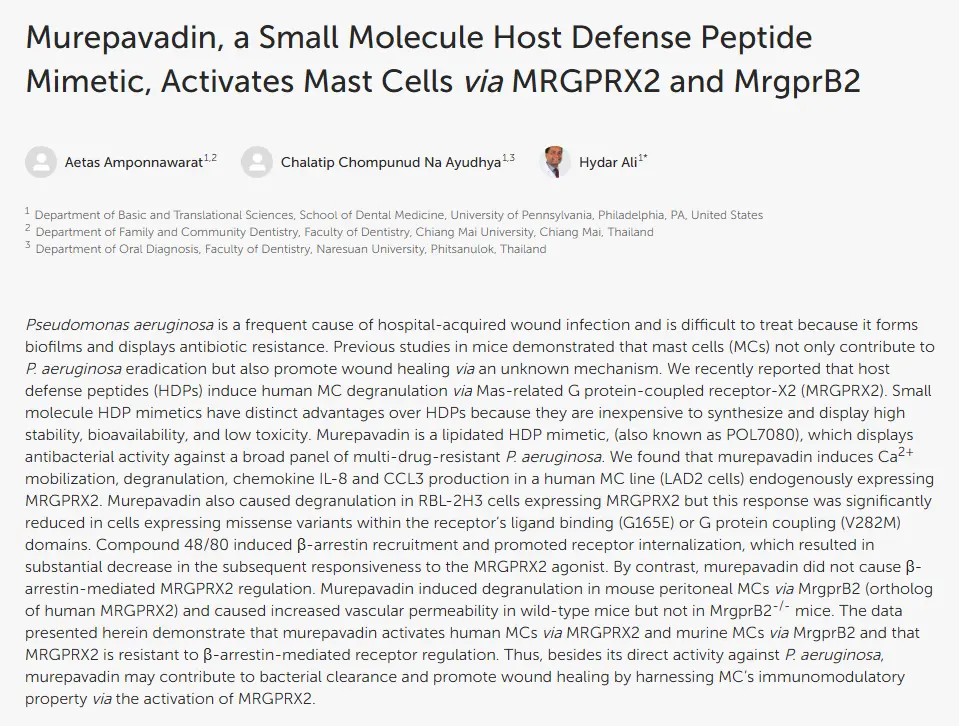
Recent studies have also uncovered its "hidden skill"—the potential for synergistic therapy. Low concentrations of moxifloxacin can enhance the permeability of the PA outer membrane, allowing β-lactam antibiotics to better penetrate bacterial cells and exert their effects. The combination of the two not only improves the therapeutic efficacy in acute pneumonia models but also delays the development of drug resistance. Additionally, as a host defense peptide analog, it can modulate human immune function, assist in bacterial clearance, and promote tissue repair, achieving a dual effect of "antibacterial + immune modulation.".
Currently, mupirocin is advancing into Phase III clinical trials, with a focus on hospital-acquired pneumonia and ventilator-associated pneumonia caused by Pseudomonas aeruginosa. In an era where treatment options for drug-resistant bacteria are increasingly scarce, this novel antibiotic—characterized by its specificity, potent efficacy, and low toxicity—represents a highly anticipated new clinical option. We look forward to the smooth progress of the research, its timely translation into clinical use, and its contribution to combating "superbugs" as a critical solution.