




In the research field of bioregulatory peptides, Prostamax (CAS: 473578-47-1) has long attracted the attention of researchers worldwide with its unique physiological activity. As a synthetic tetrapeptide belonging to the Khavinson peptide family, it is not merely a health supplement ingredient. A wealth of basic and clinical research behind it is gradually uncovering its supportive value for human health.
The core value of Prostamax is first reflected in its targeted effect on prostate health. Chronic abacterial prostatitis is a common health concern among men, and experimental research by scholars such as Borovskaya et al. in 2013 confirmed that Prostamax exhibits significant efficacy in the treatment of this condition and the improvement of its complications, offering a new approach for non-invasive intervention. This finding is not an isolated case, and its mechanism of action can be traced back to the precise regulation at the cellular level.
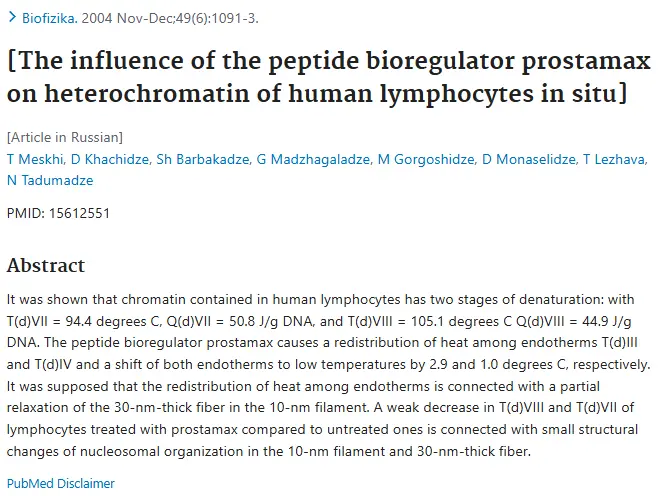
As a biological regulator, the impact of Prostamax on cellular senescence and immune function also merits attention. A 2004 study by Meskhi et al. found that it acts on the heterochromatin of human lymphocytes; by promoting chromatin decondensation, it enhances gene accessibility and protein synthesis efficiency, thereby boosting immune cell activity and building a more robust defensive barrier for the body. Further research by the Khavinson team demonstrated that such short peptides can delay the cellular senescence process by regulating epigenetics, providing potential support for healthy aging.

Unlike many ingredients on the market with vague efficacy, Prostamax has a relatively comprehensive research system. From the tissue-specific regulatory effects verified by scholars such as Zakutskiĭ et al. in organotypic tissue cultures of young and aged rats, to the experimental data on its role in prostate tissue repair and inflammation inhibition, numerous studies have confirmed the reliability of its biological activity from various dimensions. Its production process is equally stringent, complying with FDA registration and GMP certification standards, and third-party testing is conducted to ensure purity and safety, making it suitable for diverse dietary needs.
The value of scientific research lies in providing evidence-based support for health interventions. The research journey of Prostamax (473578-47-1), from cellular studies in the laboratory to clinical efficacy verification, is rooted in scientific rigor at every step. For individuals concerned about prostate health and seeking natural and mild intervention methods, it may not be a shortcut, but a reliable choice based on accumulated scientific research—after all, genuine health support has always required the endorsement of scientific evidence.
Keyword:Prostamax,473578-47-1,prostamax peptide dose,prostamax customized peptides