




Keyword:Sovateltide,142569-99-1,Sovateltide Vasoprotective Peptide
Molecular Profile: A Structurally Optimized Active Tetradecapeptide
Within the landscape of peptide drug candidate research, Sovateltide (CAS No. 142569-99-1) has emerged as a research hotspot in neuroscience and pharmacology due to its unique targets and diverse biological activities. As a synthetic tetradecapeptide, its structure is derived from the modification and optimization of naturally occurring bioactive peptides. Its distinctive amino acid sequence enables precise binding to specific receptors and regulation of complex physiological processes, with accumulating research revealing its potential clinical value.
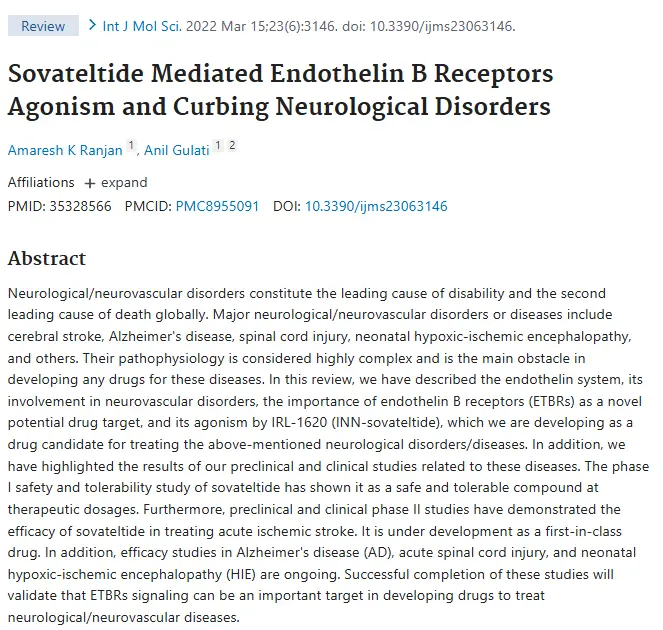
Clinical Breakthrough: Phase III Trials Validate Therapeutic Value in Stroke
In recent years, numerous high-quality studies have focused on the pharmacological effects and clinical potential of Sovateltide, among which the Phase III clinical trial published in SpringerLink in 2024 is the most representative. Adopting a randomized, double-blind, placebo-controlled, multicenter design, the study enrolled 158 patients with acute ischemic stroke. Results showed that compared with the control group, the proportion of patients with a modified Rankin Scale (mRS) score of 0–2 at 90 days was significantly increased by 22.67% in the Sovateltide group, and the proportion with a National Institutes of Health Stroke Scale (NIHSS) score of 0–5 was improved by 17.05%. No severe drug-related adverse events were observed, confirming its efficacy and safety in the treatment of acute ischemic stroke.
Mechanism of Action: Multi-Target Regulation of Neurophysiological Processes
Beyond stroke, the multi-dimensional biological activities of Sovateltide are being gradually uncovered. A 2025 review published in PubMed indicated that as an endothelin B receptor (ETBR) agonist, it increases cerebral blood flow, exerts anti-apoptotic effects, and promotes neural repair following ischemic stroke. Its therapeutic potential in neurological disorders such as Alzheimer’s disease and acute spinal cord injury is also under further investigation. In addition, studies documented in ChemicalBook show that the molecule can also bind to the neurokinin 1 receptor (NK1R), regulate central neurotransmitter release, exert potential antidepressant and anxiolytic effects, and participate in cognitive function modulation.
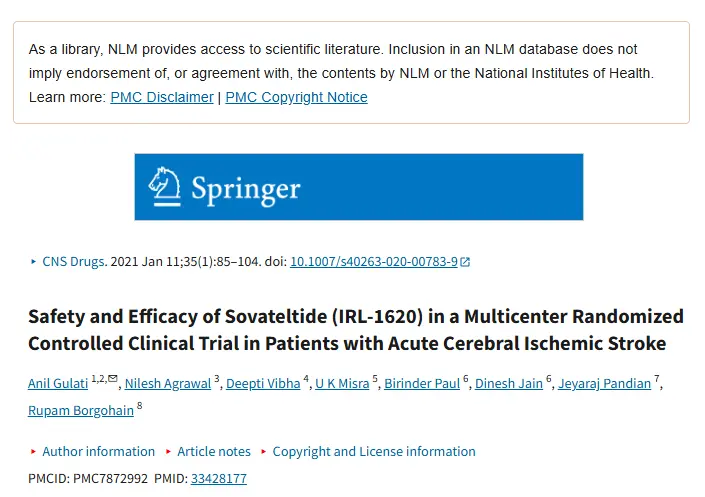
Research Progress: Steady Advancement from Basic Science to Clinical Application
From basic research to clinical exploration, the development of Sovateltide has advanced steadily. Its molecular formula is C₈₆H₁₁₇N₁₇O₂₇, with a molecular weight of 1820.95 and purity up to 99% (HPLC), providing a reliable material foundation for scientific and clinical research. A Phase II clinical trial published in PMC in 2021 (Anil Gulati, 2021) preliminarily confirmed its tolerability in patients with acute ischemic stroke, laying a solid foundation for the subsequent Phase III trial.
Application Prospects: A New Hope for Neurological Disease Therapy
Currently, Sovateltide remains in a critical stage of clinical research and has not yet been approved for widespread clinical use. Nevertheless, its breakthrough progress in neurological disease therapy has provided new ideas and directions for the treatment of related disorders. With further research, this promising peptide molecule is expected to unlock greater clinical value, bringing new hope for tackling intractable neurological diseases and improving patient outcomes.