




In the fields of immunomodulation and biomedical research, synthetic dipeptide molecules have long attracted significant attention for their precise mechanisms of action. As a representative substance mimicking the activity of natural thymic peptides, Thymogen (CAS No. 122933-59-9) has gradually demonstrated its value through years of scientific research and clinical exploration due to its unique ability to regulate immune balance. Relevant research findings have also laid a solid foundation for its application scenarios.
The core structure of Thymogen is L-glutamyl-L-tryptophan. As a synthetic analog of natural thymic peptides, it does not simply stimulate the immune system but restores immune homeostasis through precise regulation. Studies have shown that its core mechanism of action focuses on the differentiation and maturation of T lymphocytes—a key step in adaptive immune responses. Thymogen can effectively promote the transformation of T-cell precursors into immunocompetent cells, significantly enhancing the cellular immune function of the organism. In a study involving patients with type 1 diabetes complicated by secondary immunodeficiency, this substance achieved a 94.4% improvement rate in immunodeficiency symptoms, fully verifying its clinical potential.
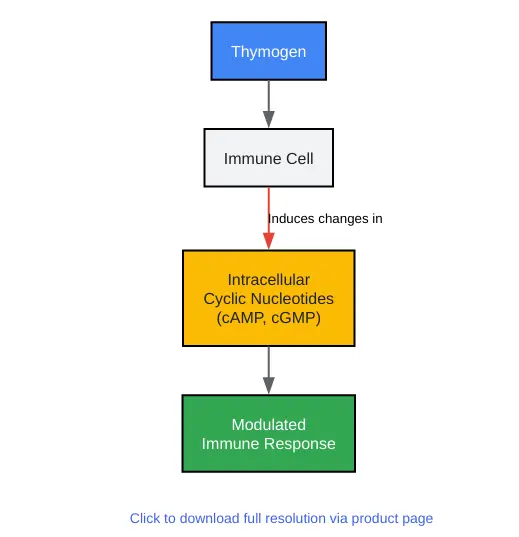
Beyond basic immunomodulation, the multi-scenario application value of Thymogen continues to be explored. In a randomized controlled trial for preoperative preparation of elderly patients with abdominal tumors, intranasal administration for 7 consecutive days before surgery significantly restored the structural and functional parameters of cellular immunity, leading to a substantial reduction in postoperative complication rates and a marked shortening of hospital stays. In the treatment of female reproductive system inflammation, it can effectively normalize lymphocyte counts and enhance the functional activity of T lymphocytes without obvious adverse reactions, providing a new direction for the comprehensive treatment of inflammatory diseases.
For drug researchers, the appeal of Thymogen also lies in its structural stability and low toxicity. As a small-molecule dipeptide, it can be administered orally or via injection, with a clear metabolic pathway in vivo and no tendency to produce cumulative toxicity. At present, Phase I clinical trials for chronic granulomatous disease and rheumatoid arthritis have completed safety verification, and preliminary data indicate that patients' immune indicators (such as the CD4/CD8 ratio) have been significantly improved (BenchChem Technical Report, 2025).
As a synthetic peptide molecule with a purity of over 99% (detected by LC-MS), the stability and safety of Thymogen make it an excellent candidate for scientific research and clinical translation. From immunodeficiency correction and inflammation regulation to tissue repair and adjuvant tumor intervention, relevant literature findings continue to enrich our understanding of this molecule. In the future, with the advancement of research, this synthetic peptide derived from natural thymic active ingredients may unlock its value in more biomedical fields.
Keyword:Thymogen,122933-59-9,Thymogen Immunomodulatory Peptide,Thymogen Bioactive Peptide