




A 28-amino-acid peptide isolated from porcine duodenum actually connects multiple physiological pathways such as vascular regulation, immune homeostasis and intestinal health—it is Vasoactive Intestinal Peptide (VIP), with the corresponding CAS number 40077-57-4, serving as a highly promising core target in life science research.
Looking back at the research history, the discovery of VIP stemmed from an accidental breakthrough in the late 1960s. When screening intestinal extracts, Dr. Sami I. Said and Dr. Viktor Mutt found that it exerted a potent vasodilatory effect. Subsequent studies confirmed that this polypeptide is highly conserved among mammals, with a sequence similarity of over 85% across mammalian species except guinea pigs and chickens, laying a solid foundation for cross-species research. As a member of the glucagon superfamily, it has a molecular weight of 3325.83 and acts both as a neurotransmitter and a neuroendocrine regulator, widely distributed in the central nervous system, digestive system and cardiovascular system.
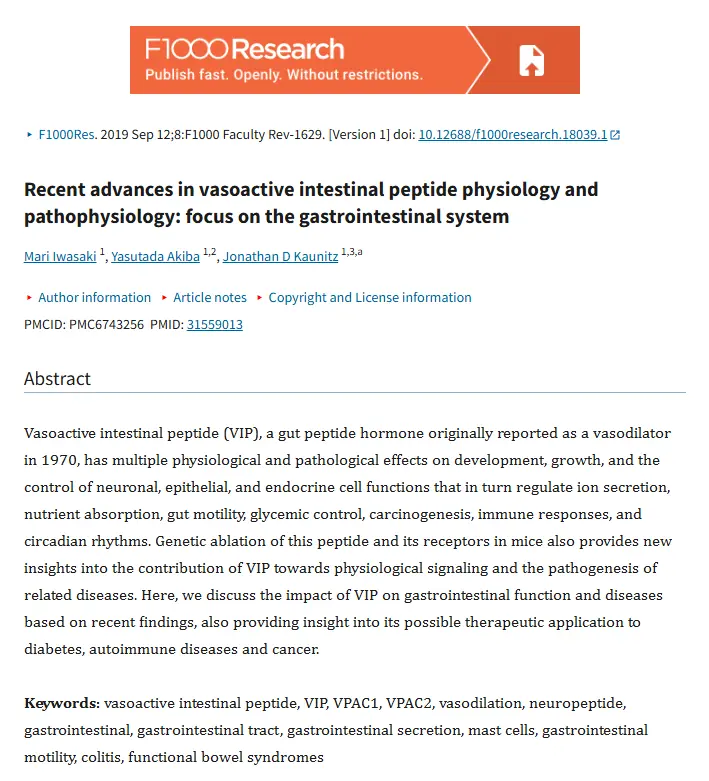
Its diverse physiological functions are remarkable. Beyond its core vasodilatory effect, VIP plays a particularly critical role in regulating gastrointestinal homeostasis: it can inhibit gastric acid secretion, relax smooth muscles, and maintain intestinal barrier function by promoting the proliferation of intestinal epithelial cells. Its deficiency tends to trigger intestinal flora imbalance and inflammatory responses. In the field of immunology, studies have verified that VIP can down-regulate the release of pro-inflammatory factors and induce the generation of regulatory T cells, providing new insights for the treatment of inflammatory bowel disease.
Explorations in the scientific research field have further expanded its application boundaries. Apedilide, a VIP analog, can induce pulmonary vasodilation and inhibit the proliferation of smooth muscle cells, showing great potential in the research of diseases like pulmonary fibrosis and pulmonary arterial hypertension, with good tolerance to acute exposure. Additionally, relevant literatures indicate that VIP plays an important role in regulating circadian rhythms, blood glucose balance as well as tumorigenesis and development, and its receptors VPAC1/2 have become hot targets for drug research and development.
From basic physiology to clinical translation, the research value of VIP (40077-57-4) continues to unfold. It is not only a key molecule for deciphering the neuro-immune-endocrine network, but also provides new therapeutic directions for autoimmune diseases, respiratory diseases and other conditions, allowing this bioactive peptide discovered half a century ago to still radiate vitality in contemporary scientific research.