




Keyword:Caerulein,17650-98-5,Caerulein Peptide
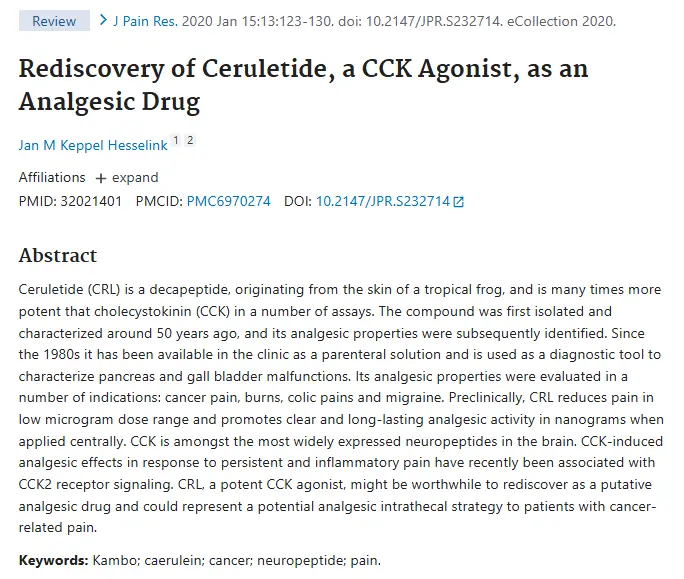
In the landscape of bioactive peptides with far-reaching physiological and pharmacological relevance, Caerulein (Ceruletide) stands out as a fascinating decapeptide, originally derived from amphibian skin and now a cornerstone in gastroenterology research, clinical diagnostics, and pain modulation studies. Also known as cerulein or ceruletide, this synthetic and naturally occurring peptide is a potent cholecystokinin (CCK) receptor agonist, mirroring the actions of human gastrointestinal hormones while exhibiting unique potency and versatility. Discovered over half a century ago, it continues to drive innovation in understanding digestive physiology, pancreatic disease mechanisms, and analgesic drug development. Below, we explore its origin, molecular structure, mechanism of action, clinical applications, research significance, and safety profile, optimized for SEO and supported by peer-reviewed research.
The Origin and Molecular Structure of Caerulein (Ceruletide)
Caerulein’s journey began in 1967, when Australian and Italian scientists isolated and characterized the peptide from the dried skin of the Australian green tree frog (Ranoidea caerulea, formerly Hyla caerulea). This marked the first identification of a bioactive peptide in amphibian skin with profound effects on mammalian digestive systems, sparking decades of research into its structure and function. Chemically, Caerulein is a 10-amino-acid decapeptide with the molecular formula C₅₈H₇₃N₁₃O₂₁S₂ and a molar mass of 1352.40 g/mol. Its amino acid sequence—Pglu-Gln-Asp-Tyr[SO₃H]-Thr-Gly-Trp-Met-Asp-Phe-NH₂—shares a critical C-terminal motif (Gly-Trp-Met-Asp-Phe-NH₂) with human cholecystokinin (CCK) and gastrin, enabling it to bind to CCK receptors with high affinity. Unlike endogenous CCK, Caerulein features a sulfated tyrosine residue, which enhances its stability and receptor-binding potency, making it more resistant to enzymatic degradation and longer-acting in biological systems. Synthetic Caerulein is now widely used in clinical and research settings, replicating the natural peptide’s activity with high purity and consistency.

Mechanism of Action: Targeting CCK Receptors for Gastrointestinal and Systemic Effects
Caerulein’s biological activity hinges on its role as a non-selective, potent agonist for cholecystokinin receptors (CCK₁ and CCK₂). CCK receptors are widely expressed across the gastrointestinal tract, pancreas, gallbladder, brain, and smooth muscle cells, making Caerulein’s effects systemic yet focused on digestive physiology. When administered, Caerulein binds to CCK₁ receptors in the gallbladder, triggering robust gallbladder contraction and bile release into the small intestine to aid fat digestion. In the pancreas, it activates CCK₁ receptors on acinar cells, stimulating secretion of digestive enzymes (amylase, lipase, proteases) and bicarbonate, critical for breaking down nutrients. For gastric function, it enhances gastric acid and pepsin secretion while slowing gastric emptying, optimizing digestion by extending nutrient contact with digestive juices. Beyond the gut, Caerulein crosses the blood-brain barrier to bind CCK₂ receptors in the brain, modulating pain signaling pathways—research shows it acts as a potent analgesic, outperforming morphine in some preclinical pain models by inhibiting nociceptive transmission and reducing inflammatory pain. Additionally, it stimulates smooth muscle motility in the small and large intestine, improving peristalsis and relieving intestinal atony. At supramaximal doses, however, Caerulein overstimulates pancreatic acinar cells, triggering intracellular vacuolization, inflammatory cytokine release (via NF-κB activation), and neutrophil infiltration—an effect widely used to induce experimental pancreatitis in animal models.
Clinical Applications: Diagnostics, Gastrointestinal Disorders, and Pain Management
Caerulein’s unique pharmacological profile has cemented its role in three key clinical areas: diagnostic gastroenterology, gastrointestinal disorder treatment, and pain management. In diagnostics, it is a gold-standard tool for evaluating pancreatic exocrine function and gallbladder motility. Administered intravenously, it stimulates pancreatic enzyme secretion; measuring enzyme levels in duodenal fluid or blood helps diagnose pancreatic insufficiency, chronic pancreatitis, or pancreatic cancer. It also aids in gallbladder imaging, assessing for gallstones, cholecystitis, or biliary obstruction by monitoring gallbladder contraction via ultrasound. For gastrointestinal disorders, Caerulein is used to treat paralytic ileus (intestinal paralysis), a common postoperative complication or side effect of opioids, by restoring intestinal peristalsis and relieving fecal stasis. It also manages postoperative gastric atony, improving gastric emptying and reducing nausea/vomiting. In pain management, Caerulein has emerged as a promising analgesic for cancer pain, postoperative pain, and migraine. Preclinical studies show it is 15–114 times more potent than morphine in pain models, with minimal risk of addiction or respiratory depression—advantages over traditional opioids. Clinical trials have demonstrated its efficacy in reducing cancer-related pain and postoperative pain, with intrathecal administration showing long-lasting analgesic effects.

Research Significance: Pancreatitis Models and Drug Development
Beyond clinical use, Caerulein is indispensable in biomedical research, particularly in studying pancreatic disease mechanisms and developing targeted therapies. Its ability to induce acute edematous pancreatitis in rodents (mice, rats) via supramaximal stimulation is the most widely used experimental model for pancreatitis research. This model replicates key features of human acute pancreatitis: pancreatic edema, inflammation, acinar cell injury, and elevated amylase/lipase levels. Researchers use it to investigate pancreatitis pathogenesis, test anti-inflammatory drugs, and develop therapies for severe acute pancreatitis (a life-threatening condition with high mortality). Additionally, Caerulein’s analgesic properties have reignited interest in CCK receptor-targeted pain drugs. As opioid addiction and overdose rates rise, Caerulein-based therapies offer a non-opioid alternative for chronic pain, with ongoing research into optimizing its formulation (e.g., sustained-release injections) and delivery routes. It also serves as a tool to study CCK signaling in the brain, exploring links between CCK, anxiety, appetite regulation, and neurodegenerative diseases.
Safety Profile and Adverse Effects
Caerulein is generally well-tolerated in clinical and research settings, with adverse effects being mild, transient, and dose-dependent. The most common side effects are gastrointestinal: abdominal cramps, nausea, diarrhea, and bloating, typically resolving within 30–60 minutes after administration. These effects stem from its stimulation of gastrointestinal smooth muscle and secretions. Hypotension (low blood pressure) and flushing may occur at high doses, due to systemic vasodilation, but are rare in therapeutic use. Hypoglycemia is not a risk, as Caerulein does not directly affect insulin secretion. No serious adverse events (e.g., organ toxicity, allergic reactions) have been reported with standard clinical doses, and long-term use for chronic pain is being evaluated for safety. In research models, supramaximal doses induce pancreatitis, but this is a deliberate experimental effect, not a safety concern in clinical practice.
Key Takeaways
Caerulein(Ceruletide) is a multifaceted bioactive peptide that bridges natural amphibian biology and human medicine. As a potent CCK receptor agonist, it regulates gastrointestinal function, aids in diagnosing pancreatic and biliary disorders, treats paralytic ileus, and acts as a powerful non-opioid analgesic. Its role in inducing experimental pancreatitis has been pivotal in advancing our understanding of pancreatic diseases and developing new therapies. With a favorable safety profile and ongoing research into pain management and gastroenterology, Caerulein remains a vital tool in clinical practice and biomedical research, highlighting the enduring value of natural bioactive peptides in modern medicine.