




You may feel unfamiliar with the substance numbered 154947-66-7, but its corresponding LL37 is an indispensable "core player" in the human innate immune system. As the only human Cathelicidin-type antimicrobial peptide, this small molecule composed of 37 amino acids has long gone beyond the simple positioning of "killing bacteria" and has become a highly sought-after all-rounder in the scientific research community.
LL37 boasts broad-spectrum antibacterial activity, exerting inhibitory effects on Gram-positive bacteria, Gram-negative bacteria, fungi and viruses. Its unique amphipathic α-helical structure enables it to function by damaging the cell membranes of pathogens or interfering with intracellular metabolic pathways, and it is not prone to inducing drug resistance—an advantage that traditional antibiotics can hardly match. Studies have found that it exhibits outstanding performance in corneal infection protection and wound healing regulation, and can dose-dependently stimulate the migration of corneal epithelial cells, providing new ideas for the treatment of ocular infections.
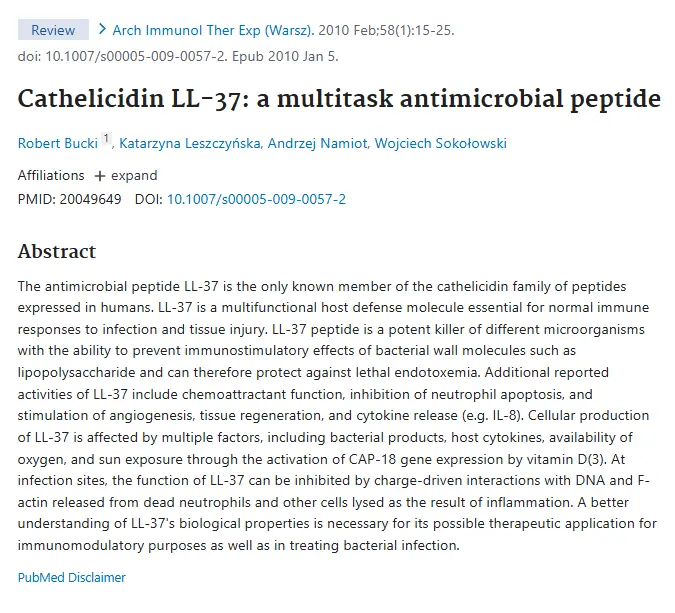
What is even more surprising is its strong potential in immune regulation and tissue repair. In lung infection models, LL37 effectively alleviates MRSA-induced pneumonia symptoms in mice by inhibiting the release of inflammatory factors such as IL-6 and TNF-α. In the field of ischemic diseases, it can promote angiogenesis by activating the VEGFA-PI3K/AKT/mTOR pathway, significantly improving blood perfusion in mice with lower limb ischemia, and opening up new directions for the treatment of chronic ischemic diseases.
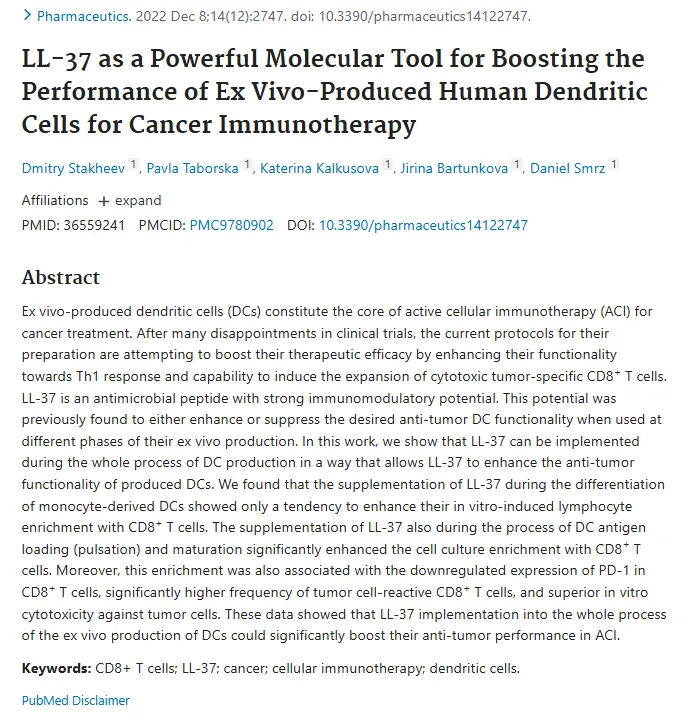
LL37 has also left its mark in the field of tumor immunotherapy. Research shows that adding LL37 throughout the in vitro preparation process of dendritic cells can significantly enhance their ability to induce the proliferation of tumor-specific CD8⁺ T cells, while down-regulating PD-1 expression and enhancing T cell cytotoxicity, thus providing a new tool for boosting the efficacy of cellular immunotherapy. Even in COVID-19 treatment, oral administration of LL37 can significantly shorten the nucleic acid negative conversion time of patients infected with the Omicron variant without causing serious adverse reactions, demonstrating great potential for clinical translation.
From a natural immune barrier to a disease treatment target, every function of LL37 is supported by solid scientific research evidence. It is not only a "vanguard" against pathogens, but also a "regulator" that modulates immune balance and promotes tissue repair. With the in-depth analysis of its mechanism of action, this "multifunctional guardian" inherent in the human body is expected to shine more brightly in fields such as anti-infection, cardiovascular disease treatment and tumor therapy in the future.